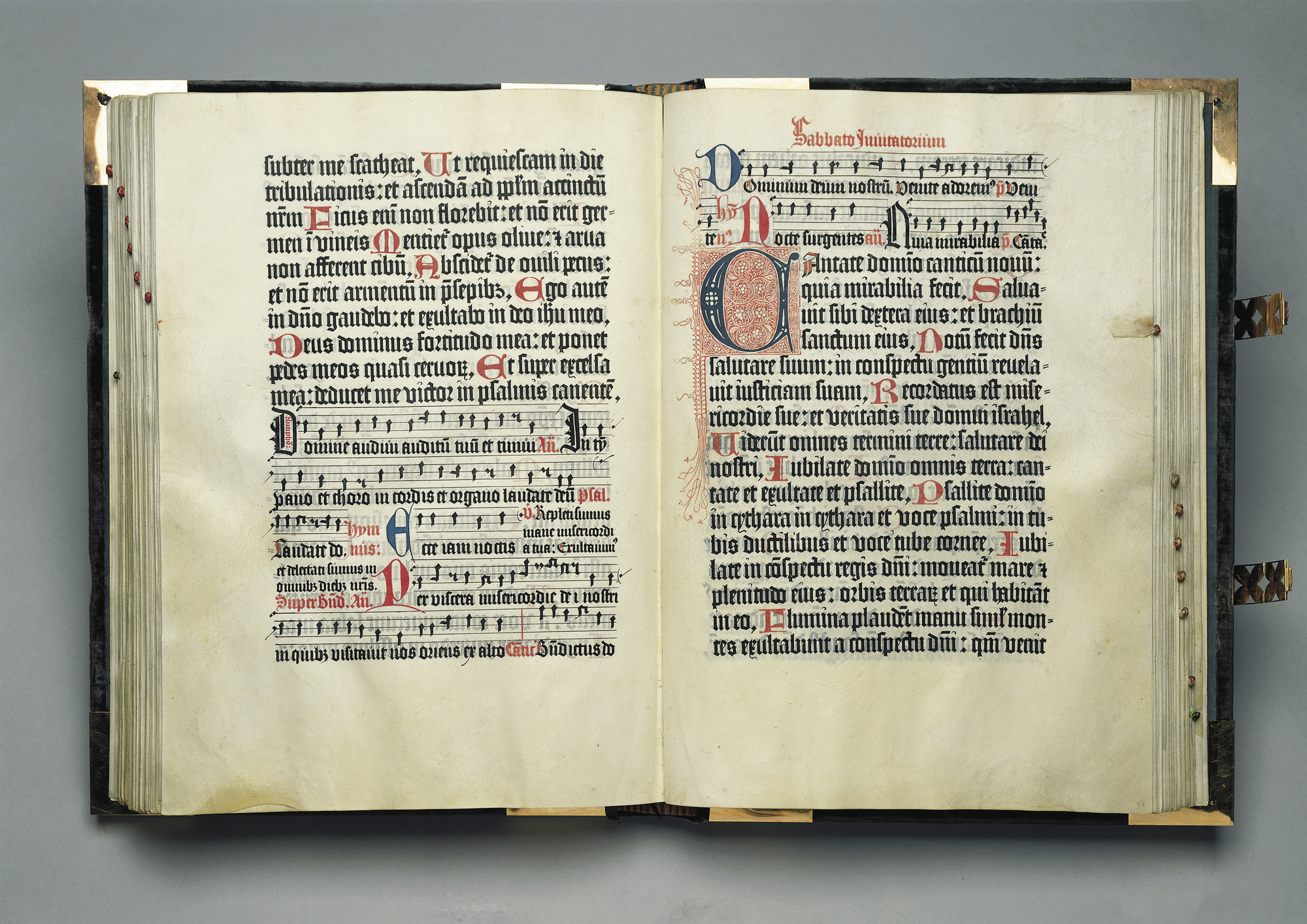
Printed on vellum in black and red, with woodblock two-colour initials, manuscript music and large coloured capitals in blue and red; folio. | 43.8 x 32.3 x 7.5 cm (book measurement (conservation)) | RCIN 1071478
Cited in back matter of Rickett’s Hero and Leander.
“This illustrated edition of the epyllion (epic poem) by the Greek poet Musaeus (also seen as Musaios, late fifth century-early sixth century) relating the tragic love story of Hero and Leander is one of the first editions produced by Aldus Manutius the elder (1449 or 1450–1515) in his Venetian printing workshop, the Aldine Press. The book contains the text of the poem in the original Greek, in 343 hexameters, and a Latin translation.”
Represents: “tale of love and antiquarianism and a prime document of the Renaissance rediscovery of classical antiquity
produced by the important Venetian publisher Aldus Manutius (ca. 1450–1515). A specialist in the publication of Greek texts, Aldus was also famous for developing new formats, such as the small, handheld book, and new typefaces, such as the italic
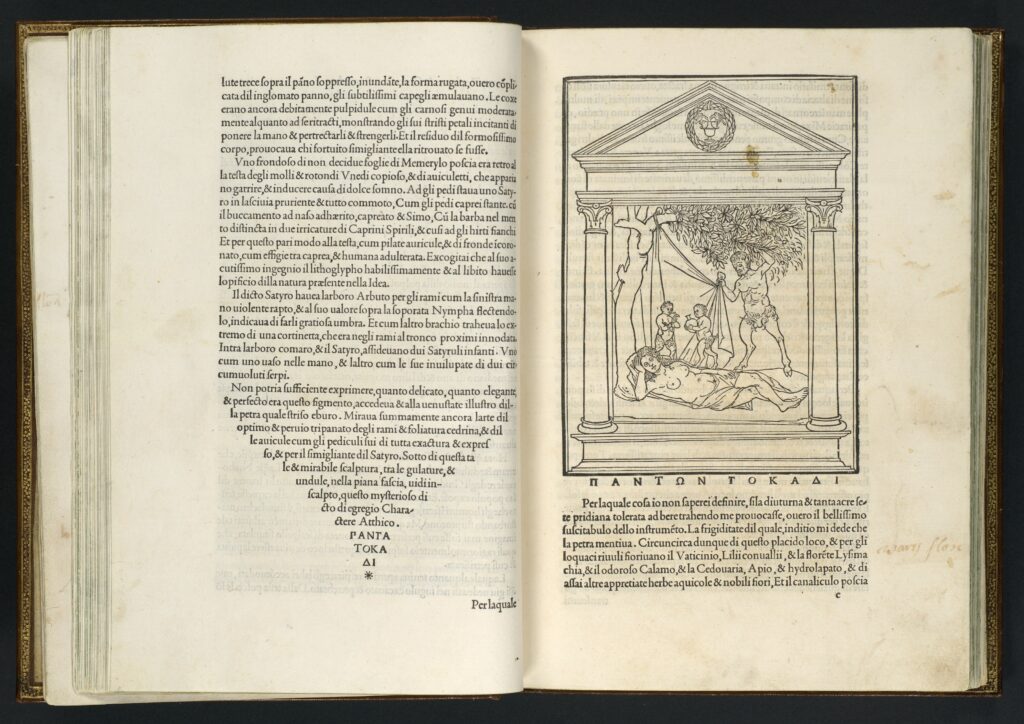
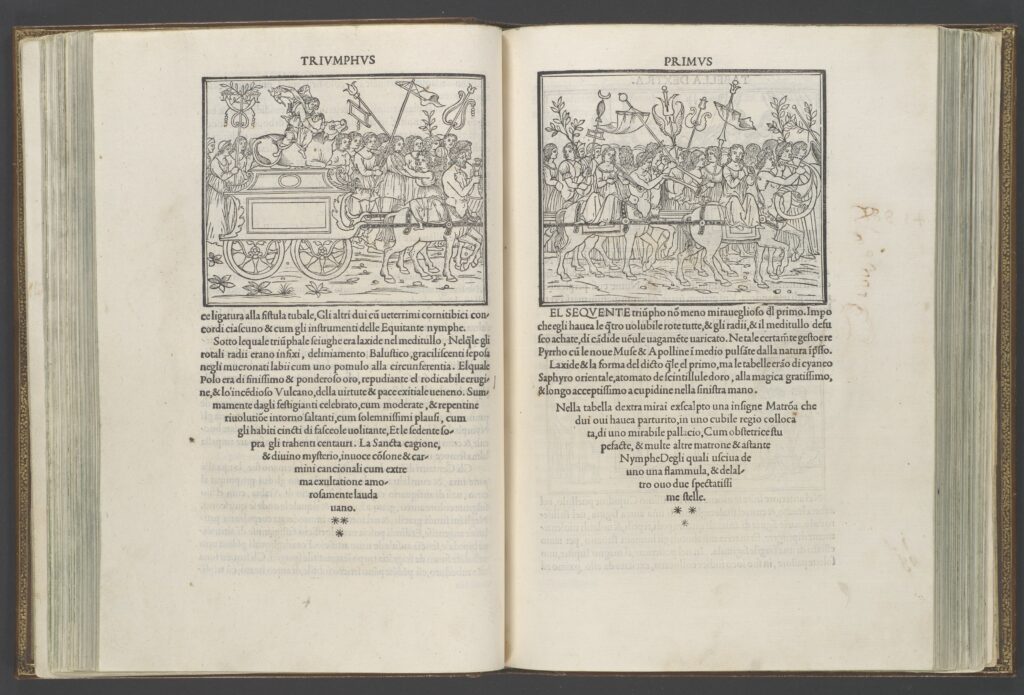
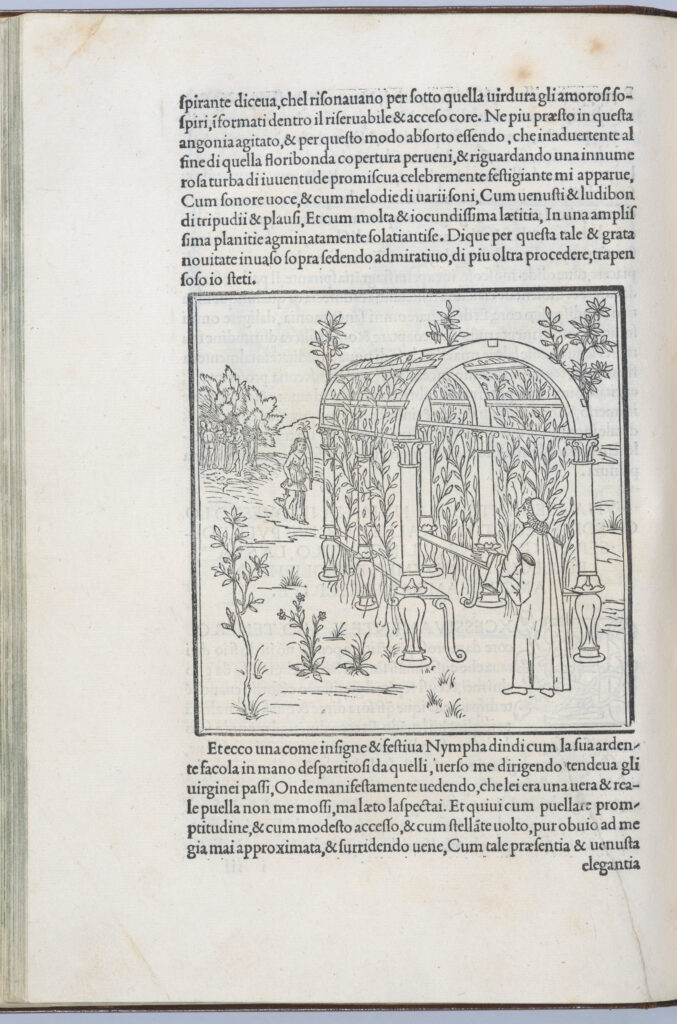
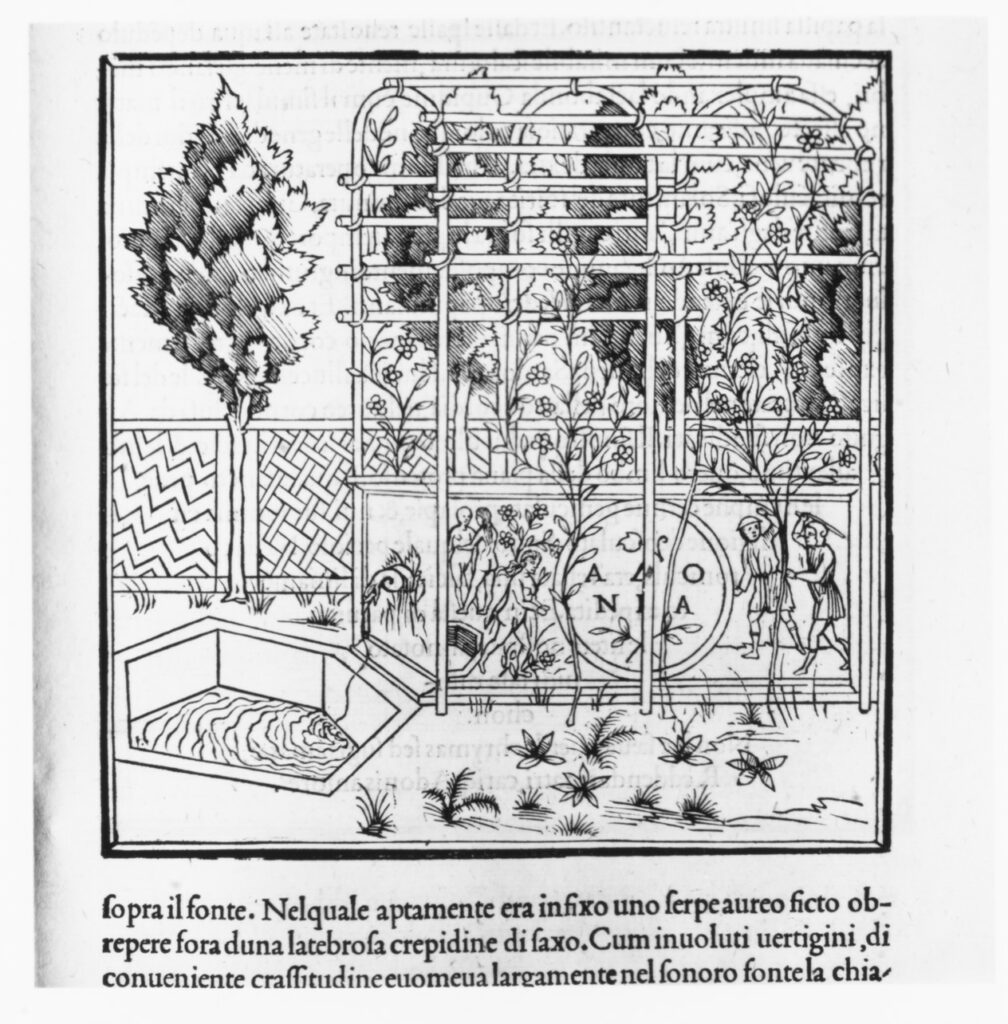
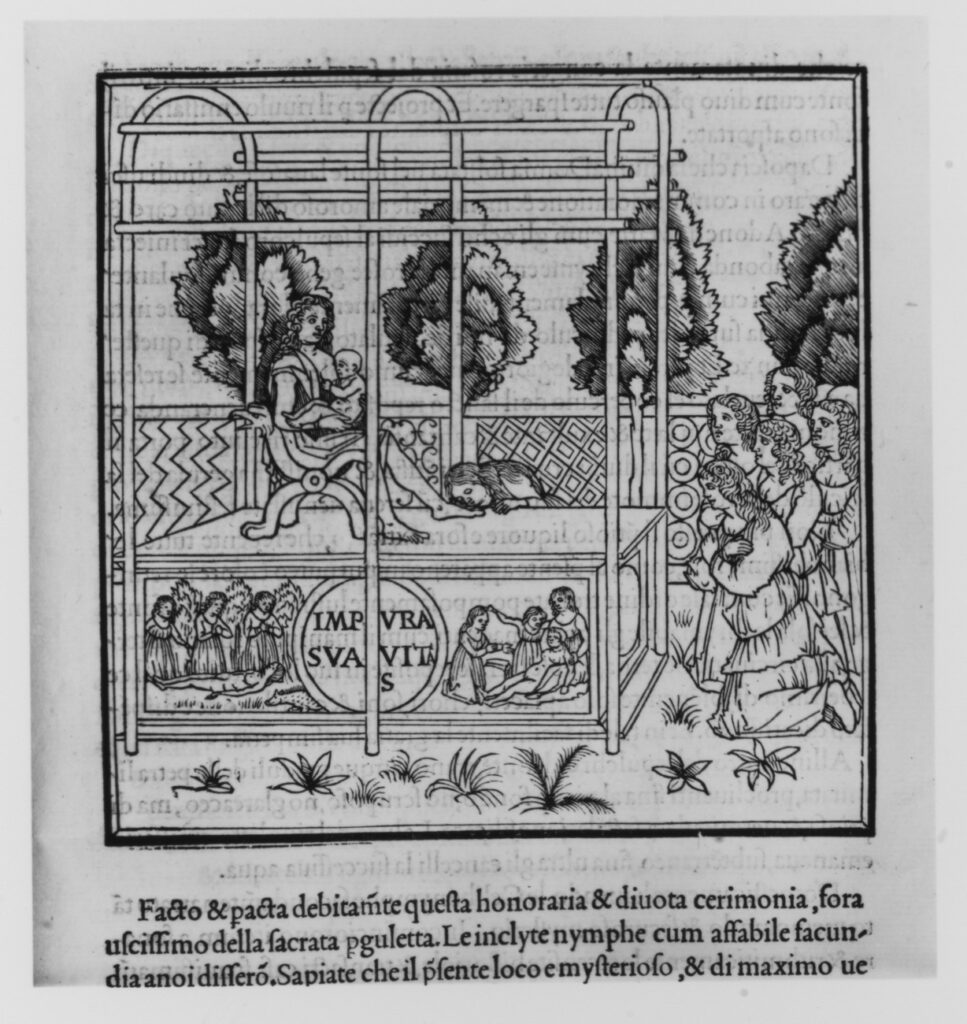
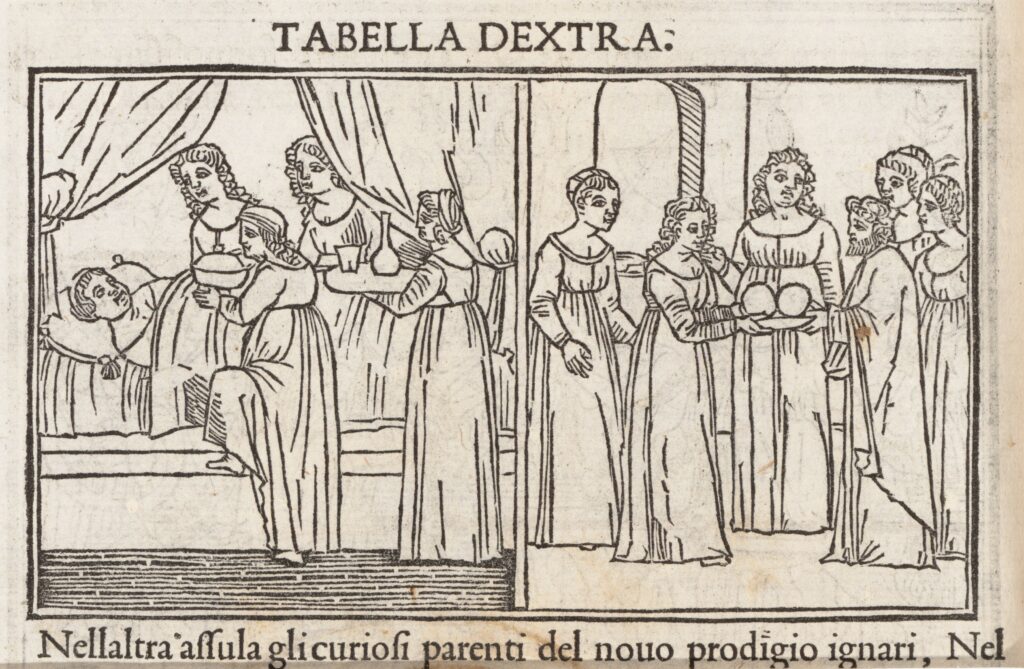
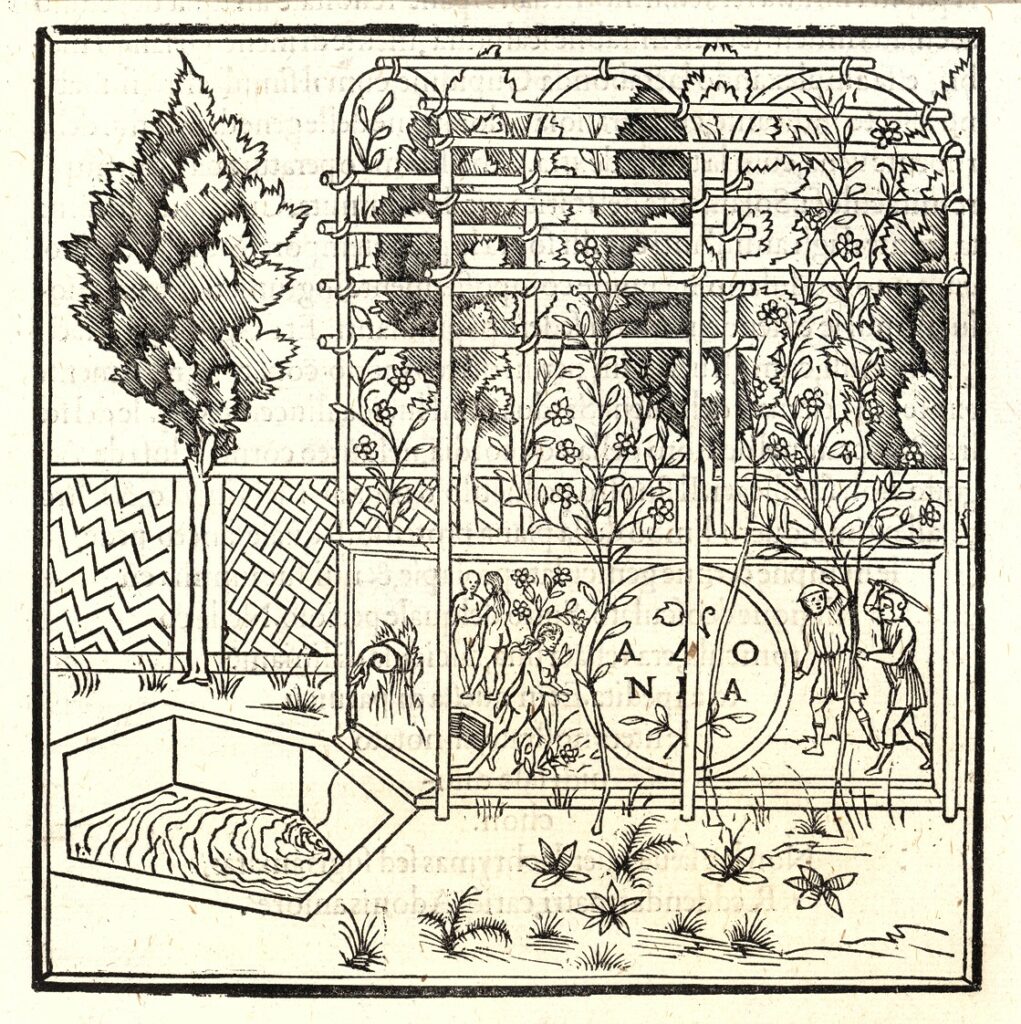
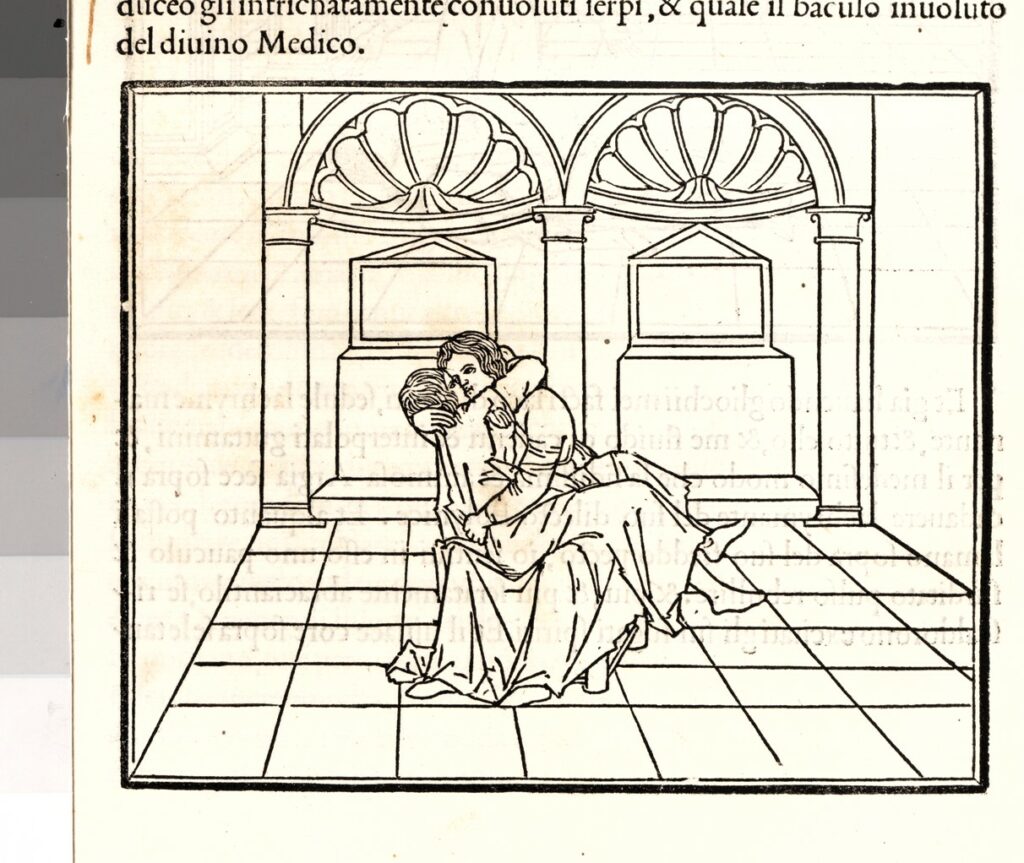
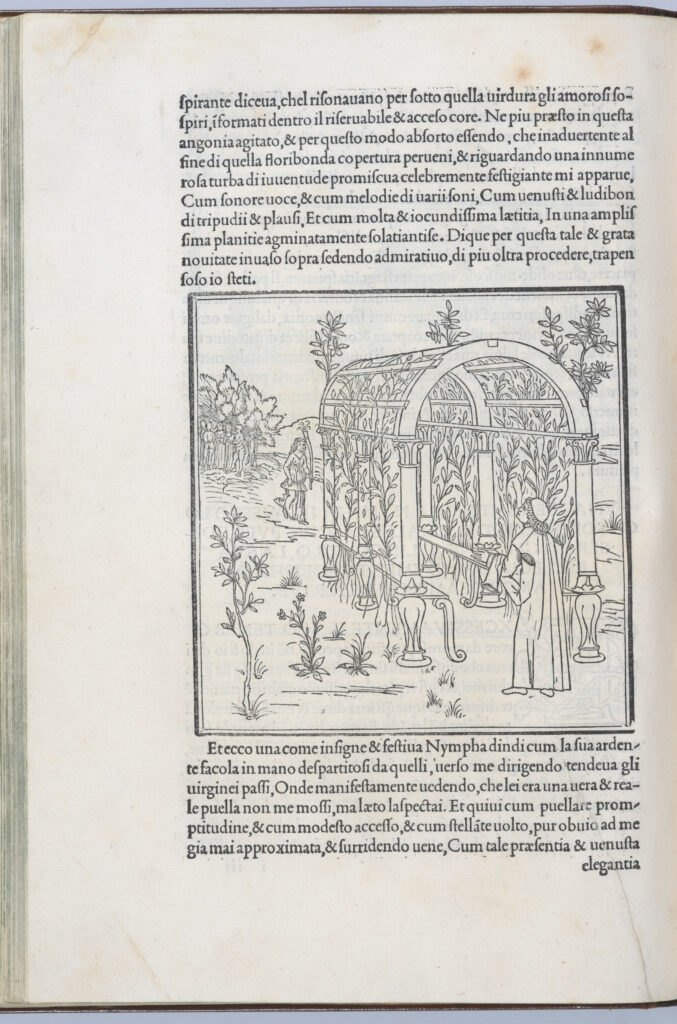
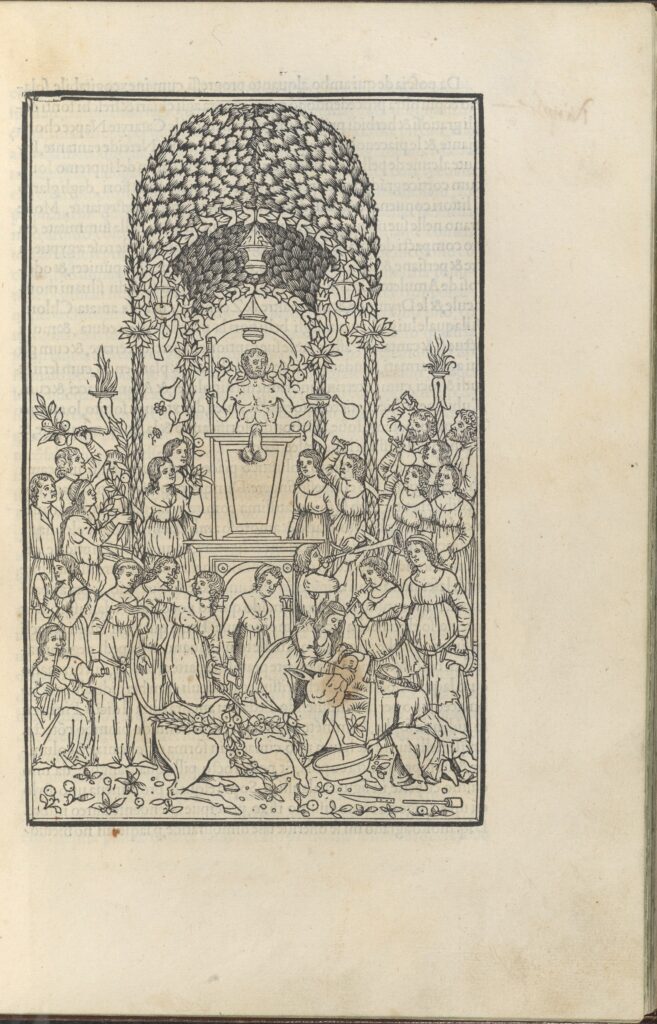
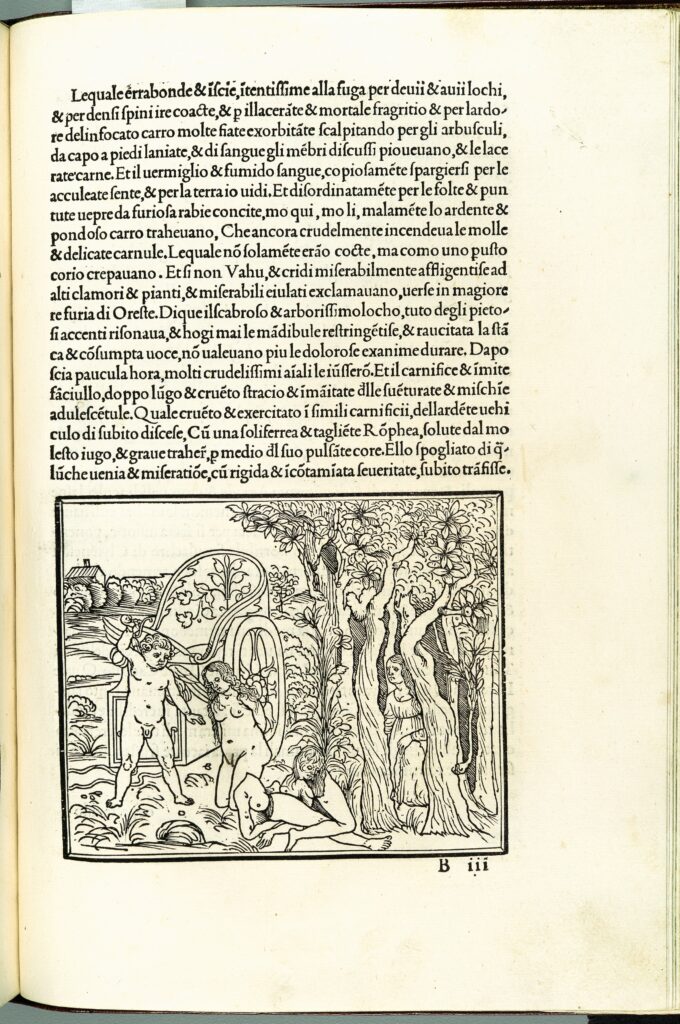
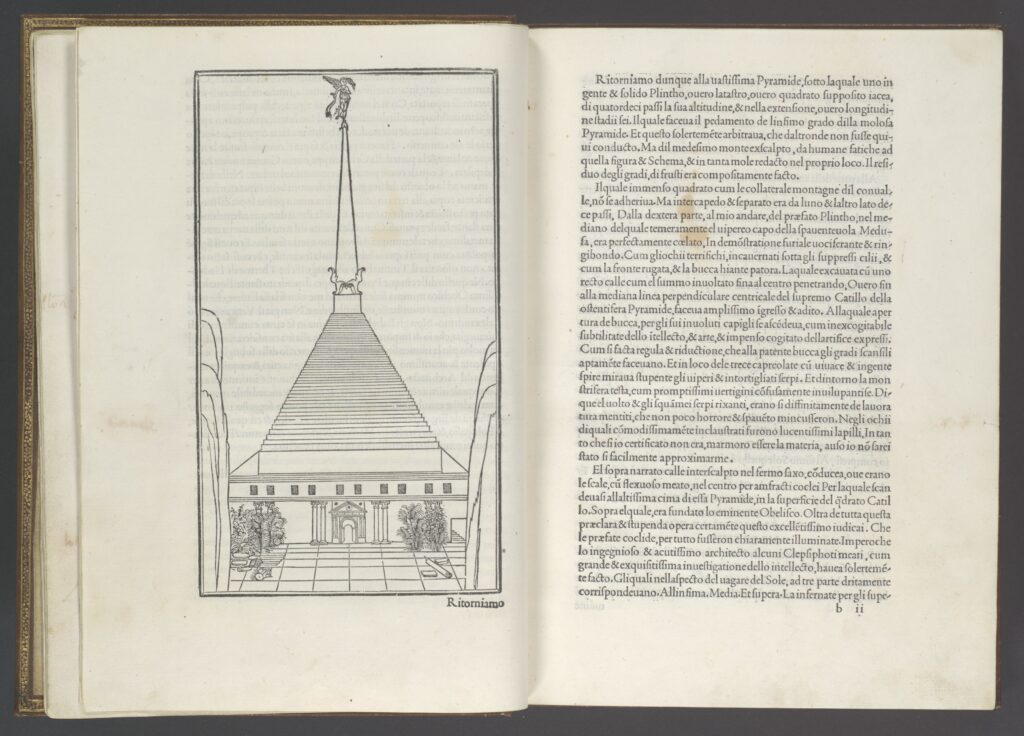
The typeface used in the Hypnerotomachia Poliphili, based on ancient Roman inscriptions, was created by Aldus’ type designer Francesco Griffo of Bologna especially for this book, which has long been admired for its harmonious marriage of text and image. The spare and elegant illustrations reveal a careful study of ancient art as well as an interest in the new science of one-point linear perspective.”
signature d8 verso and e1 recto (Text; Satyr with Sleeping Nymph)
signature k5 verso and k6 recto (First Triumph, right and left sides)
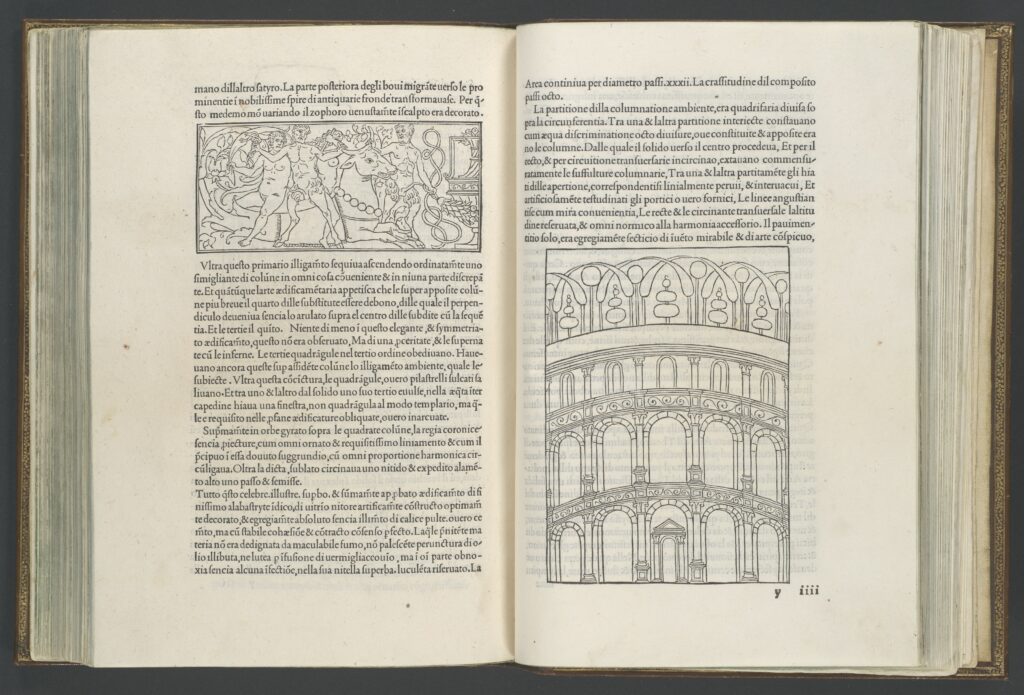
signature y3 verso and y4 recto (Nymphs and satyrs; amphitheater)
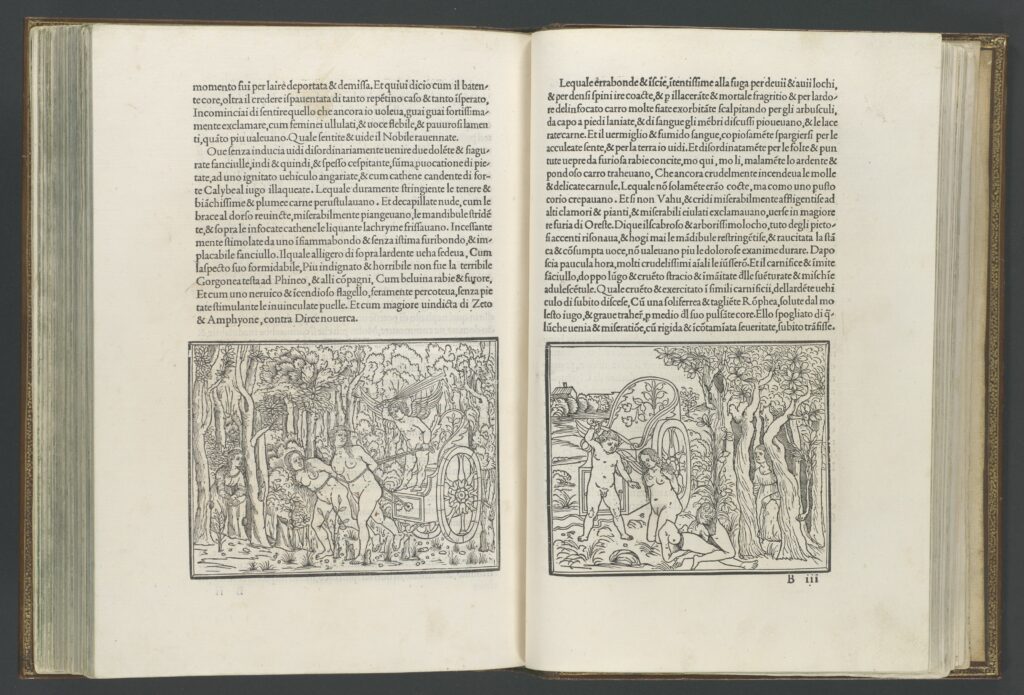
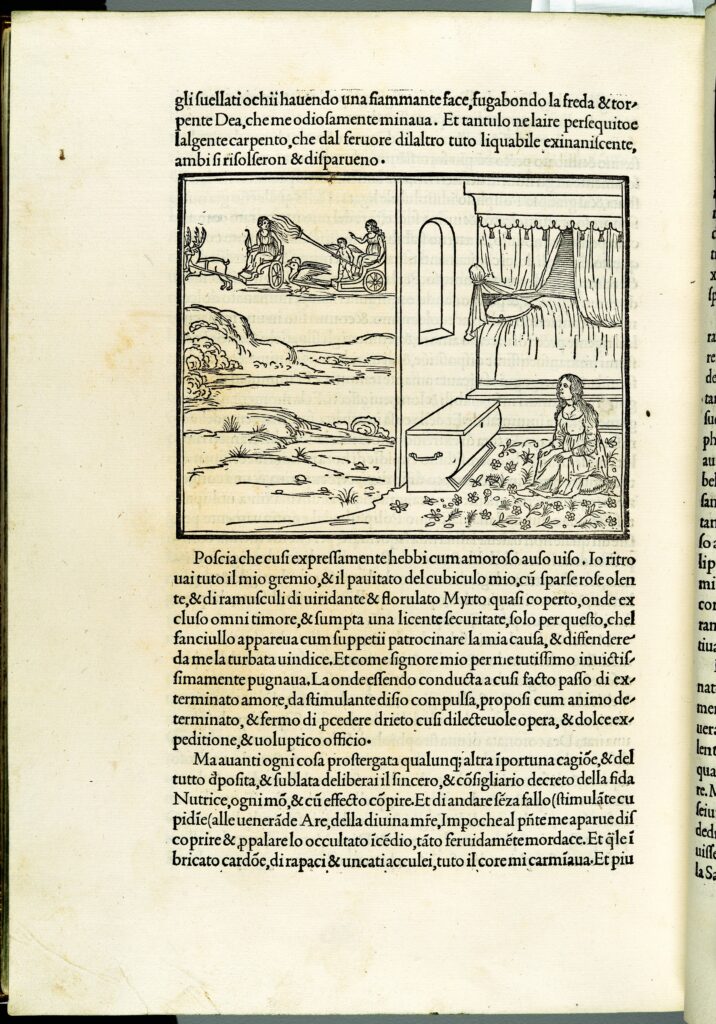
signature b2 verso and b3 recto (Polia’s dream: Cupid in chariot; Cupid with sword)
Verso of page “f”
Francesco Colonna (Italian, ca. 1453–1517)
Hypnerotomachia Poliphili, December 1499
Italian,
Woodcut;
The Metropolitan Museum of Art, New York, Gift of J. Pierpont Morgan, 1923 (23.73.1-)
http://www.metmuseum.org/Collections/search-the-collections/365313
signature C7 verso
Leaf m vi recto
signature B3 recto (Polia’s Dream: Cupid with sword)
signature b1 verso and b2 recto (Marvelous temple; text)