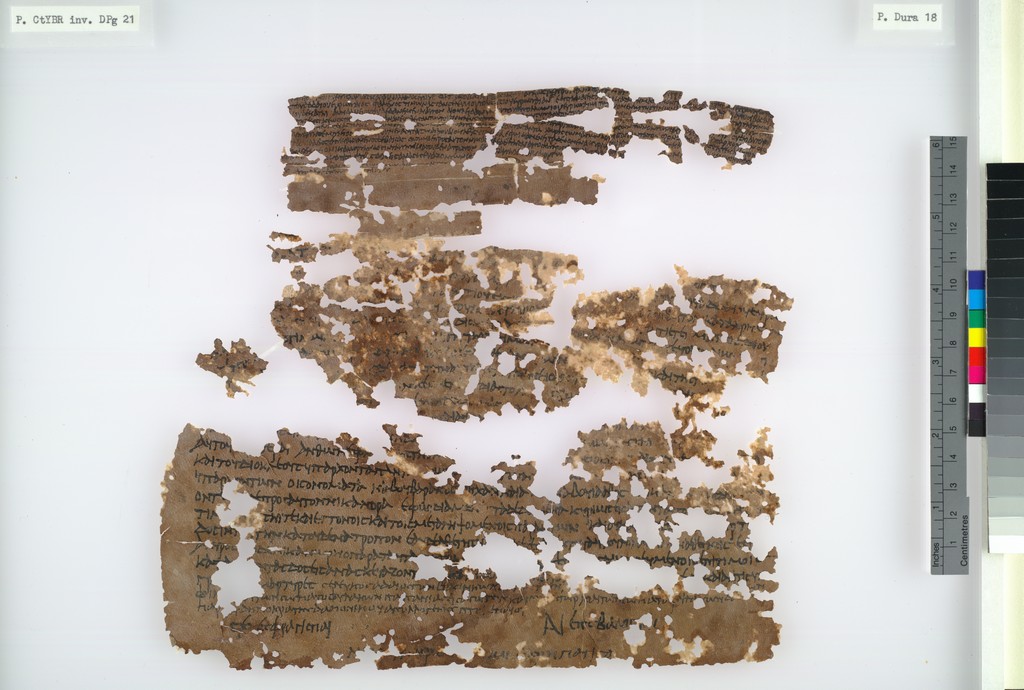
To read Sarasota in the archive is to move between place and record. A street, shoreline, building, or neighborhood is experienced as a lived environment, but enters an archive through permits, maps, newspapers, photographs, property records, institutional files, and memories. Each form makes some dimensions of place visible and leaves others difficult to recover. Local history begins in the interval between those forms.
Place is not a backdrop
Dolores Hayden describes place as a storehouse of social memory. The built environment gathers work, movement, exclusion, celebration, and loss. A building’s official description may preserve its date and architect while omitting the people who used it, contested it, or were prevented from entering it. A local archive can bring those accounts into relation without pretending that they are interchangeable.
Doreen Massey’s account of space and place further complicates the idea of locality. Places are made through relations that extend beyond their boundaries. Sarasota can therefore be studied through local records and through the routes of migration, tourism, labor, capital, and cultural exchange that those records register unevenly.
Reading fragmentary records
A map does not show a community in full. A newspaper does not report every event. A photograph frames a scene and excludes its surroundings. The researcher’s task is to identify each record’s production conditions before combining it with another. What was the record for? Who commissioned it? Who had access to its vocabulary? What kinds of memory did the format make difficult?
Pierre Nora’s distinction between memory and history is useful but should not be treated as a strict opposition. Public memory can be organized through historical institutions, while archival records can carry affective attachments. A preservation file may be dry in tone and still be evidence of what an institution considered worth keeping.
Community history
Local historical work is strongest when residents are not treated merely as sources for a professional narrative. People hold knowledge about vanished businesses, informal meeting places, domestic networks, and changes to the built environment that may never have entered official records. Oral testimony can point toward documents, correct catalog language, and identify what should remain private.
That participation also introduces disagreement. Two memories of a place may conflict; a celebrated landmark may be experienced as exclusionary; a preservation campaign may protect a building while displacing the story of those who lived nearby. The archive should retain those tensions as part of the record rather than flattening them into a single civic theme.
Public history and uncertainty
Public-facing history has a special obligation to distinguish evidence from reconstruction. When a surviving record does not establish a specific event, an essay can describe the question that remains open. Cautious language is not evasive. It gives readers a way to understand how knowledge is made and where further research might change it.
A local digital journal can support that practice by linking each interpretive claim to a visible description of its sources. It can name collections, identify gaps, and invite correction without promising that every correction will produce a complete account. The result is a public history that is confident about its method and modest about its reach.
Classes of local evidence
Different records answer different questions about place. A map can show an intended arrangement of streets or parcels, but not necessarily how people moved through them. A directory can preserve names and addresses while omitting informal uses of a building. A newspaper can reveal public language and institutional priorities, but its silence cannot establish that an event or community was absent. A photograph can make a façade vivid while leaving the photographer’s position and the frame’s exclusions uncertain. The historian begins by matching the question to the affordances of the record.
Ephemera complicate this matching process. A program, handbill, postcard, menu, or personal note may have been made for a short-lived purpose and survive by accident. Its value lies partly in its smallness. It can show how a place was addressed, advertised, remembered, or shared without claiming to represent the whole locality. Such records are especially useful when read alongside more formal documents, not because one corrects the other automatically, but because their differences disclose distinct social worlds.
1 These are methodological examples; the essay does not treat any one record class as a complete account of Sarasota.
Memory and documentation
Remembering a place is not the same as documenting its history. Memory can preserve atmosphere, sequence, attachment, and loss in ways a form cannot. Documentation can establish dates, ownership, and institutional action in ways recollection may not. The difference is not a contest in which one source must defeat the other. It is a reason to ask what kind of truth each source can responsibly support.
Public history often works at this boundary. An exhibit, walking tour, or digital journal may begin with a remembered place and then seek corroborating records. The research process should not treat corroboration as a test of whether the memory mattered. A memory can be historically significant because it shaped a community’s understanding even when no surviving document confirms every detail. Conversely, a document can be accurate in its narrow administrative sense and still omit the experience that made a place meaningful.
2 The distinction protects both forms of evidence from being asked to perform a function they cannot perform alone.
Built environments and change
Buildings and streets are often presented as stable objects, but their meanings change through use. A structure can be described by architectural style, property record, or planning document and still have a different history for the people who worked, gathered, lived, or were excluded there. Reading the built environment requires attention to those uses and to the policies that made some uses visible in official records.
Change is also unevenly documented. A demolished structure may leave a permit, a photograph, or a brief notice, while the social networks around it survive only in memory. A renovated building may retain its façade while losing the practices that once made it recognizable. Historical writing should describe these transformations carefully. It should avoid turning continuity of material form into continuity of community meaning.
3 “Built environment” names a field of relations among material structures, uses, regulations, and memories, not only the visible architecture.
Archives and public accountability
A local archive can help readers see how a historical account was assembled. It can identify the class of source behind a claim, distinguish a contemporary record from a later recollection, and mark where a collection is incomplete. These practices are valuable even when they make a narrative less seamless. A seamless story can hide the labor and judgment that produced it; a documented story lets readers participate in evaluating its limits.
Accountability also includes the right not to expose every local record. Public history should consider privacy, community consent, and the consequences of making a detail newly searchable. A collection may be preserved while an item remains restricted, or a description may identify a theme without publishing a person’s private information. Such boundaries do not weaken the historical record. They show that access is an ethical relationship rather than a simple technical setting.
4 The obligation to explain a gap does not create an obligation to disclose protected personal information.
The most responsible local history therefore leaves a visible trail of method. It tells readers what kind of record supports a claim, what remains conjectural, and what further evidence would matter. That trail makes an unfinished history usable rather than deficient.
In this sense, the archive is not a warehouse behind the narrative. It is the conversation that allows a place to be remembered without being simplified.
The most responsible local history therefore leaves a visible trail of method. It tells readers what kind of record supports a claim, what remains conjectural, and what further evidence would matter. That trail makes an unfinished history usable rather than deficient.
In this sense, the archive is not a warehouse behind the narrative. It is the conversation that allows a place to be remembered without being simplified. It also gives readers permission to return to the record, ask a different question, and recognize that historical understanding changes as new voices enter the conversation.
Conclusion
Sarasota in the archive is not a finished portrait of a city. It is a set of encounters among documents, places, memories, and people who decide what should be carried forward. Reading those encounters requires attention to scale: the detail of a record, the history of an institution, and the larger relations that made a local scene possible. Place becomes legible when those scales are allowed to remain connected.
5 This essay uses Sarasota as a field of inquiry and does not assert a complete account of any particular local event without a cited record.
Place can be read as social memory and as a set of relations extending beyond locality (Hayden 1995; Massey 1994; Nora 1989).
Bibliography
- Hayden, Dolores. The Power of Place: Urban Landscapes as Public History. Cambridge, MA: MIT Press, 1995.
- Massey, Doreen. Space, Place, and Gender. Minneapolis: University of Minnesota Press, 1994.
- Nora, Pierre. “Between Memory and History: Les Lieux de Mémoire.” Representations, no. 26 (1989): 7–24.